Is your Castle Rock home comfortable in January and efficient in July? If you feel drafts in winter or see bills spike in summer, you are not alone. Our climate rewards the right upgrades with lower costs, better comfort, and stronger resale. In this guide, you will learn which features matter most in Castle Rock, how to prioritize projects, where to check incentives, and how to document upgrades so buyers recognize the value. Let’s dive in.
Why efficiency matters in Castle Rock
Castle Rock sits at mid elevation on the Front Range with cold winters, warm summers, and big day-night temperature swings. That makes insulation, airtightness, and efficient heating your highest-impact moves. At the same time, our strong sun creates real potential for productive rooftop solar.
You want upgrades that cut winter heat loss, manage summer heat gain, and work well with local utility rates and incentives. With the right plan, you can improve comfort now and position your home to stand out when it is time to sell.
High-impact upgrades to prioritize
Seal and insulate the attic
The attic is often the best first step. Attic air sealing and insulation reduce winter heat loss and curb summer heat gain. A blower door test can find the biggest leaks so you target the right fixes. In many homes, this work is accessible and delivers some of the fastest payback periods.
Air and duct sealing
Leaky walls, penetrations, and ductwork can waste a surprising amount of conditioned air. Sealing the envelope and ducts is a cost-effective way to boost comfort room to room. If ducts run through an unconditioned space, sealing and insulating them can improve both heating and cooling performance.
Efficient windows and doors
Modern double or triple-pane windows with low-e coatings help control winter heat loss and summer solar gain. Proper installation and flashing are critical to avoid air leaks around frames. If full replacement is not in budget, targeted repairs and air sealing around existing units still help.
Smarter heating and cooling
Cold-climate heat pumps
Modern cold-climate air-source heat pumps deliver efficient heating in low temperatures and provide efficient cooling in summer. They are a prime option if you plan to electrify or replace aging equipment. For fundamentals and system types, see the U.S. Department of Energy’s overview of heat pump systems at the DOE Energy Saver resource.
High-efficiency furnaces and hybrid systems
Many Castle Rock homes use natural gas furnaces. If you stay with gas, look for high AFUE models. A hybrid setup that pairs a heat pump for most days with a gas furnace for the coldest snaps can optimize comfort and operating cost.
Smart thermostats and zoning
A smart thermostat is a low-cost, high-impact upgrade for comfort and bill control. Zoning can reduce hot and cold spots and help manage those large day-night temperature swings common here. These features are often eligible for utility rebates, so check local program details before you buy.
Water heating that saves
Heat pump water heaters are highly efficient and work well in many homes. They can deliver large savings, especially when paired with available rebates. High-efficiency tankless or condensing gas units are another option if you prefer gas. Compare lifecycle costs and consider where the unit will sit for noise and temperature impacts.
Solar, battery, and EV readiness
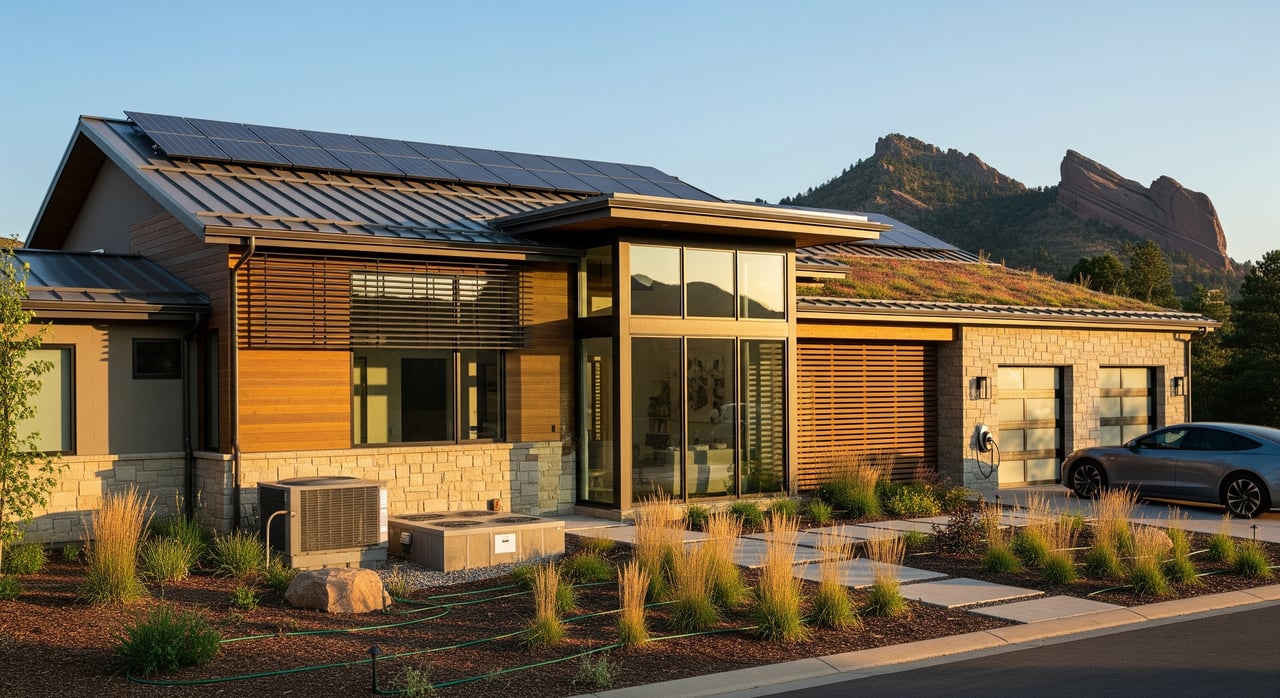
Rooftop solar can perform very well given our high solar resource. Key factors include roof age, sun exposure, orientation, and shading. Use tools such as NREL’s PVWatts to estimate potential production. Battery storage adds resilience and can shift solar use into evening hours, though economics depend on incentives and your utility’s rate structure. If you drive an EV or plan to, adding a Level 2 charger is a relatively low-cost feature that buyers increasingly value.
Appliances, lighting, and fresh air
ENERGY STAR appliances and LEDs
ENERGY STAR certified refrigerators, dishwashers, washers, and dryers cut energy and often reduce water use too. Compare models on the ENERGY STAR product list. Swapping to LED lighting delivers immediate savings and better light quality for minimal cost.
Ventilation and indoor air quality
As you tighten a home, balanced ventilation protects indoor air quality. Energy recovery ventilators are well-suited to cold, dry climates like ours. For ventilation basics and options, the DOE Energy Saver ventilation page is a helpful starting point.
Outdoor and water-wise strategies
Smart landscaping can improve comfort and lower bills. Deciduous trees provide summer shade and allow winter sun to warm your home. Windbreaks can reduce winter heat loss. Xeriscaping and efficient irrigation controls help cut water use and energy tied to irrigation systems.
Incentives and codes to check
Incentives and rules change, so verify current details before you commit. These resources are a reliable starting point:
- Federal tax credits: Many residential solar and qualifying battery installations are generally eligible for a federal tax credit. Confirm details on federal resources and IRS guidance. A good primer on residential technologies is the DOE Energy Saver site.
- State programs: The Colorado Energy Office provides statewide information on electrification, weatherization, and incentives.
- Local incentives database: Search the DSIRE database for rebates and policies that apply in Castle Rock and Douglas County.
- Utility rebates and rates: Check your utility program page for rebates on heat pumps, heat pump water heaters, home energy upgrades, and solar, plus information on time-of-use rates and net metering.
- Local codes and permitting: Contact Castle Rock and Douglas County building departments for current energy code adoption, and permit requirements for HVAC, solar, and EV chargers.
How upgrades affect resale
Documentation buyers value
Proof beats promises. Provide 12 months of utility bills, receipts and warranties for HVAC, water heaters, and windows, and any solar contracts with interconnection approvals. A professional energy audit, blower door and duct test results, and contractor scopes of work demonstrate real performance. If your home is rated, include HERS or other third-party certificates. Learn more about HERS at RESNET’s HERS Index overview and explore ENERGY STAR Certified Homes for recognized benchmarks.
How appraisers evaluate efficiency
Third-party certifications, documented savings, and clear ownership of solar systems are most persuasive. Lenders and appraisers vary in how they value efficiency features, so your best strategy is a concise package of evidence buyers and appraisers can trust.
Red flags during due diligence
Watch for mismatched systems, such as a small heat pump serving a leaky home. Look for poorly installed insulation, moisture or condensation around windows, and dated or unsafe gas appliances if you plan to electrify. For solar, verify permits, interconnection, production history, inverter warranties, and roof condition.
Typical payback ranges
- Attic air sealing and insulation: usually a lower-cost upgrade with payback ranging from a few years to about a decade, depending on energy prices and home conditions.
- Heat pumps vs high-efficiency furnaces: payback depends on relative gas and electric rates, your usage, and incentives.
- Solar PV: commonly a multi-year payback in the 6 to 12 plus year range, influenced by system size, incentives, and rate structures. Ownership and documentation support resale value.
Step-by-step plans
If you are selling soon
- Schedule a basic energy audit and blower door test. Fix clear air leaks and add attic insulation if levels are low.
- Service HVAC and water heaters and gather maintenance records, receipts, and warranties.
- Tackle quick wins: seal ducts, install LED lighting, and add a smart thermostat. If you have solar, prepare a clean file of contracts, interconnection documents, and production history.
- Create a one-page energy profile with utility history and key upgrades to hand to buyers.
If you are buying in Castle Rock
- Ask the seller for 12 months of utility bills, any HERS or ENERGY STAR certifications, and documentation on HVAC, water heater, and window upgrades.
- Confirm permits for major work and request recent inspection reports when available.
- If you plan to add a heat pump, heat pump water heater, solar, or an EV charger, have a contractor assess electrical load and panel capacity.
- Consider an independent energy audit during the inspection period if efficiency is a priority.
Your next move
A smart efficiency plan in Castle Rock starts with the basics and builds toward bigger upgrades when timing and incentives align. Whether you are prepping a listing or comparing homes, we can help you weigh comfort, costs, and resale impact with local context. Ready to prioritize upgrades or market your home’s energy features with confidence? Connect with The Real Estate Experts of Denver to schedule a free consultation.
FAQs
What are the most cost-effective energy upgrades for a Castle Rock home?
- Start with attic air sealing and insulation, then address duct sealing and a smart thermostat before considering larger projects.
How do heat pumps perform in Castle Rock winters?
- Modern cold-climate air-source heat pumps provide efficient heating at low outdoor temperatures and offer efficient cooling in summer.
How does rooftop solar impact resale value in Castle Rock?
- Owned systems with clear documentation and production history are attractive to buyers and can support stronger offers compared to leased systems.
What documentation should a seller provide to prove efficiency?
- Provide 12 months of utility bills, receipts and warranties, energy audit results, permits, and any HERS or ENERGY STAR certifications.
Where can Castle Rock homeowners find current rebates and incentives?
- Check the Colorado Energy Office and the DSIRE database for statewide and local listings, and review your utility’s rebate and rate pages for program details.