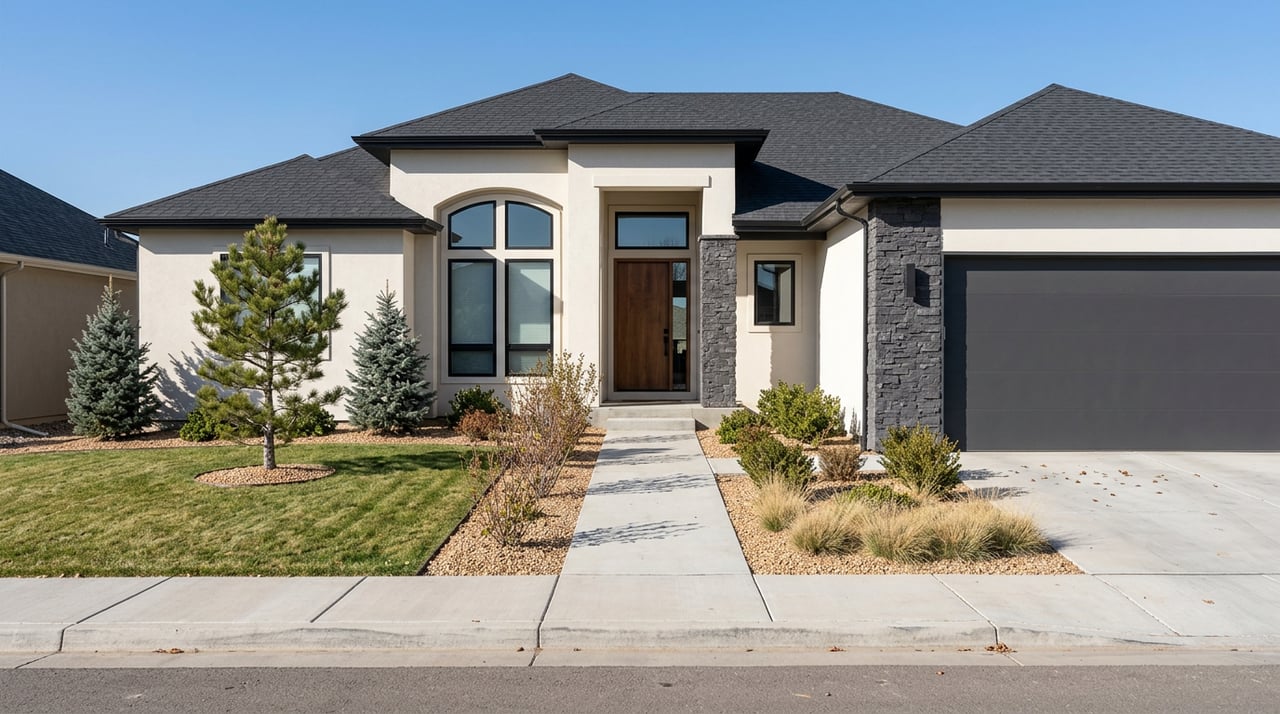
Thinking about moving to Parker but not sure where to start? When you are relocating, it is hard to compare neighborhoods from a distance, especially when commute times, HOA amenities, and lot sizes vary so much. You want a clear way to narrow options fast without missing what matters day to day. This guide breaks Parker into three easy-to-understand neighborhood types, shares current price and commute markers, and gives you a practical shortlisting framework you can use from anywhere. Let’s dive in.
Why Parker draws relocators
Parker sits about 23 miles southeast of downtown Denver along Parker Road and has grown steadily over the past decade. The town blends a walkable Mainstreet core with extensive trails and easy access to regional job centers. Get a quick feel for place and history by skimming the Parker overview.
For budget context, the U.S. Census 2020–2024 5-year estimate puts Parker’s median owner-occupied home value around $646,300 and the mean travel time to work around 26.1 minutes. These are useful baselines when you compare neighborhood price bands and commute tradeoffs. You can view both figures on Census QuickFacts for Parker.
Parker also plans actively for growth. The town’s downtown vision and transportation work shape how corridors evolve, which matters if you care about long-term walkability and traffic. You can explore the adopted downtown framework on the Mainstreet Master Plan page and see related documents on the Master Plans and Guiding Documents index.
How neighborhoods break down
Parker’s residential areas fall into three broad types. Sorting your search this way will make your first pass much faster.
Established cores near Mainstreet
What it feels like: Smaller or mature suburban lots, some older ranches and bungalows, and the easiest access to downtown events, shops, and the PACE arts campus. If you like short local errands and a defined town-center atmosphere, this is where to look.
Representative areas: Downtown/Mainstreet Parker and nearby older pockets. The town is investing in pedestrian and retail upgrades, as outlined in the Mainstreet Master Plan, so expect a continued focus on a lively core.
What to weigh: Fewer brand-new subdivisions, more renovated homes and infill. If walkability to dining and events is a top priority, place these streets early in your tour list.
Master-planned communities with amenities
What it feels like: Larger planned neighborhoods built mostly since the 1990s and 2000s with HOA-run pools, clubhouses, trails, and playgrounds. Streetscapes are consistent and many builder floorplans repeat across phases.
Representative areas: Stonegate, Stroh Ranch, Idyllwilde, Meridian Village, Anthology, and Trails at Crowfoot. Each has its own mix of parks, paths, and gathering spaces. Lot sizes tend to be moderate, and most errands are an easy drive along Parker Road.
What to weigh: HOA fees and amenities differ by subdivision and phase. Price bands vary by year built, lot size, and model. Use recent sold comps to set expectations by neighborhood.
Rural-feel and larger-lot outskirts
What it feels like: Larger lots, more space and privacy, and in some pockets a forested setting. Drive times for errands and commuting are longer and utility arrangements can differ from in-town neighborhoods.
Representative areas: The Pinery and Pradera, along with other acreage and golf-club communities. These tend to sit at the upper end of local price ranges and appeal if you value privacy, views, or specialty amenities.
What to weigh: Confirm water and sewer districts, HOA covenants, and any special assessments during due diligence. If you are new to acreage properties, budget extra time to review utilities and road maintenance details.
Price and home style markers
Use two quick markers to frame your search:
- Town baseline: The median owner-occupied value is roughly $646,300 based on the latest 2020–2024 ACS figure. See Census QuickFacts.
- Current snapshot: A recent ZIP 80134 market snapshot in February 2026 shows a median sale price around $680,000. ZIP-level feeds move faster than Census baselines, so use them to gauge today’s market while using the town figure for context.
Across Parker you will find a wide range of options, from some condo and townhome communities in the lower price bands to luxury, acreage, and private-club properties that can reach seven figures. Common styles include two-story suburban plans and single-story ranch layouts, with craftsman and Colorado-inspired exteriors in older pockets and open-plan interiors in newer builds.
Commute and transportation basics
Mean travel time to work sits around 26.1 minutes at the town level, but test your specific route during peak hours. Many Parker residents commute to the Denver Tech Center, downtown Denver, or nearby suburban job centers. You can confirm the commute baseline on Census QuickFacts.
Key routes to know:
- Parker Road - CO 83 is the primary north-south corridor into the metro. Downtown and corridor plans guide how intersections and adjacent land uses evolve. See the town’s Master Plans and Guiding Documents.
- E-470 toll beltway provides faster, more reliable access to DIA and the DTC, with toll costs to factor into your budget. Read more about the facility on the Colorado State Highway 470 page.
- I-25 access via Lincoln or Chambers is a common route to central Denver and the Tech Center. Review the town’s planning documents for upcoming capacity and intersection improvements before you finalize a location.
Transit notes: Parker’s plans reference park-and-ride capacity and regional bus connections, though car travel is more common. For a deeper look at downtown mobility and transit references, scan the Mainstreet Master Plan full report PDF in the town’s document center: Parker Mainstreet Master Plan report. Always verify current RTD schedules before you rely on a daily bus commute.
How to use this when shortlisting: Pick an acceptable one-way time, then test door-to-work travel at typical peaks from each finalist neighborhood. If you expect to use E-470 regularly, prioritize neighborhoods with quick access to an entrance. For DTC versus downtown commutes, test both Parker Road and E-470 plus I-25 on sample days.
Everyday life and amenities
Healthcare: AdventHealth Parker is the primary hospital in town, a practical anchor for many buyers. Explore services and location on the AdventHealth Parker site.
Parks, trails, and recreation: Parker maintains an extensive trail network, and the Cherry Creek Trail runs through town. The Rueter-Hess Reservoir is a growing regional recreation draw with hiking and non-motorized boating programs. Check current hours and reservation rules on the Douglas County Rueter-Hess Recreation page. For a quick overview of community features and arts programming like the PACE Center, see the Parker overview.
Groceries and shopping: Major grocers and retail clusters sit along Parker Road and near the larger master-planned nodes. Walkability to shops is strongest in and near Mainstreet, while planned communities tend to offer short drives to everyday errands.
A simple shortlisting framework
Use this 5-step process to narrow options quickly, even from out of state.
- Prepare data inputs
- Note Parker’s median owner value from ACS (
$646,300) and the recent ZIP 80134 median sale price ($680,000 in Feb 2026). The ACS figure is a baseline. The ZIP snapshot reflects current conditions.
- Filter by budget band
- Group neighborhoods into Entry/Condo-Townhome, Mid-market Single Family, and Premium-Acreage based on recent sold medians. Remove any that sit outside your band.
- Filter by commute tolerance and routes
- Define an acceptable one-way time. Test peak travel for each finalist neighborhood using likely routes. Score reliability, not just best-case timing.
- Score lifestyle priorities
- Score each finalist 0 to 3 on these criteria: walkability to Mainstreet, HOA amenities, lot size and privacy, open-space access, shopping convenience. Rank by total.
- Verify and visit
- Request HOA covenants, fee schedules, reserve studies, meeting minutes, and any special assessments. For acreage, confirm water and sewer districts and utility details. Plan two field checks per neighborhood if possible, or ask your local agent to record drive-through videos at peak times.
Copy-ready checklist
- Budget band set: Entry | Mid-market | Premium
- Commute tolerance set: 30 | 45 | 60 minutes
- Lifestyle priorities scored: Walkability | HOA | Lot size | Open space | Shopping
- HOA docs reviewed: CC&Rs | Fees | Reserves | Minutes | Special assessments
- Utilities verified for acreage: Water district | Sewer | Road maintenance
- Field checks done: Weekday AM | Weekend PM | Noise | Traffic | Access
Sample shortlist matrix
| Neighborhood | Est. price band | One-way commute | Lifestyle score 0-15 | HOA monthly | Notes-red flags |
|---|---|---|---|---|---|
| Example A | Mid-market | 30 min to DTC | 11 | $75 | Intersection project planned |
| Example B | Premium-acreage | 45 min to downtown | 9 | $0 | Well-water district |
| Example C | Entry | 25 min to DTC | 10 | $300 | Upcoming HOA assessment |
Due diligence before offers
Planning and road projects: Review the town’s planning pages for zoning, corridor studies, and transportation improvements that could change traffic and walkability near your shortlist. Start with the Master Plans and Guiding Documents.
Market context and comps: Use current MLS or ZIP-level snapshots to confirm today’s price bands by neighborhood. Keep in mind that Census figures are helpful baselines but lag the market.
Amenities and services: Confirm hospital proximity, park and trail access, and seasonal operations at Rueter-Hess via Douglas County Rueter-Hess Recreation. For downtown improvements and streetscape plans, see the Mainstreet Master Plan.
HOA and title checklist: Request HOA covenants, amendments, reserve studies, financials, and any pending assessments. For acreage properties, verify water and sewer districts and ask title to pull easements affecting the lot.
Ready to compare Parker neighborhoods with a local pro at your side? Reach out to The Real Estate Experts of Denver to get custom neighborhood suggestions, live commute checks, and a copy of our printable shortlisting worksheet.
FAQs
What is the typical home value in Parker, CO?
- The latest U.S. Census 2020–2024 estimate shows a median owner-occupied value around $646,300 for Parker. See the figure on Census QuickFacts.
How long is the average Parker commute to work?
- The mean travel time to work is about 26.1 minutes townwide. Your actual door-to-work time will vary by neighborhood and route, so test peak travel from your shortlist.
Which Parker areas feel most walkable to downtown?
- Streets in and around Mainstreet offer the strongest walk-to-dining and events feel and are the focus of the town’s Mainstreet Master Plan.
Where can I find larger lots or a more private setting?
- The Pinery, Pradera, and other acreage or golf-club communities on Parker’s outskirts typically offer larger lots and more space, with longer drives for errands and commuting.
What are my options for reaching DIA and the DTC?
- E-470 provides a reliable toll route to DIA and the DTC, while Parker Road and I-25 offer non-toll options. Learn about the beltway on the Colorado State Highway 470 page.