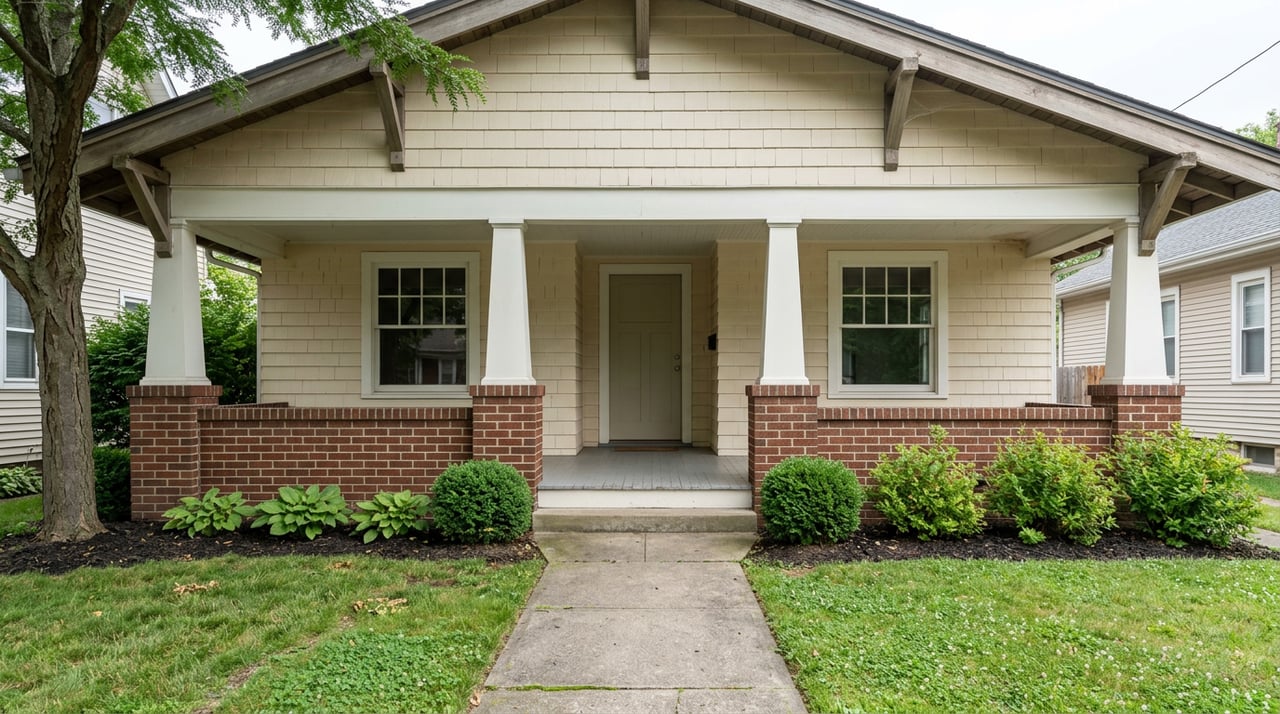
A buyer walks into a listing on a quiet block near Gaylord Street. The photos showed a tired 1920s bungalow with original windows and a kitchen that hasn't been touched since the Carter administration. It's priced under $900,000, well below the neighborhood's usual range, and the buyer's first thought is relief. Finally, something they can actually compete for.
Five days later the listing goes under contract for cash, no inspection contingency, closing in three weeks. The buyer never got a showing. The winning bidder wasn't a young family. It was a builder.
This happens often enough in Washington Park that it isn't an anomaly. It's the market working exactly as it's built to work, and understanding why changes how you should shop here.
The House Isn't Setting the Price. The Lot Is.
Washington Park's bungalow stock was built mostly between 1900 and 1940 on lots that typically run 6,000 to 7,500 square feet. Those dimensions matter more than almost anything happening inside the house, because a lot that size, close to the park and the Gaylord Street retail strip, has become valuable enough on its own to set a floor under every sale regardless of condition.
A report by The Cherry Creek News described the mechanism plainly: smaller bungalows in central and south Denver have been trading for $1.3 million to $1.5 million based almost entirely on land value, with buyers intending to demolish and rebuild rather than renovate. The replacement homes going up on these lots often exceed 5,500 finished square feet, which pushes the upper end of the market and resets the appraisal expectations for every remaining original home nearby.
That's the part first-time Wash Park shoppers miss. A dated kitchen or a leaking roof doesn't discount the price the way it would in most Denver neighborhoods, because the buyer competing against you isn't valuing the kitchen at all. They're running a construction budget against a resale number, and if that math clears, the land price holds regardless of what's sitting on top of it.
The Metro Median Tells You Almost Nothing Here
Denver Metro's median closing price sat at $605,000 in July 2026, according to Denver Metro Association of Realtors data reported by Colorado Biz, up nearly 3 percent from a year earlier. That's the number most home search sites will show you when you start looking at Denver broadly.
Washington Park isn't operating anywhere near that number. The Cherry Creek News reported a neighborhood median listing price above $2 million, with more than a hundred properties sold in the trailing period and homes sitting a median of 74 days on market. That gap between the citywide figure and the neighborhood figure isn't a rounding difference. It's evidence that Wash Park is functionally a separate market wearing the same city name.
Here's where it gets more specific, and more useful if you're actually shopping here. The neighborhood doesn't have one price, it has several, stacked by product type:
| Segment | Typical range |
|---|---|
| Attached (townhomes, condos) | $550,000 to $850,000 |
| Entry-level detached | $850,000 to $950,000 |
| Typical detached single-family | $1.1 million to $1.4 million |
| Park-perimeter, renovated, oversized lot | $1.6 million to $2.5 million |
| New construction or high-end gut renovation | $3 million and up |
The real affordability lever in Washington Park isn't finding a rough detached house. It's deciding whether you need detached at all. Attached product is the one segment genuinely insulated from the scrape-value floor, because a townhome or condo doesn't come with a buildable lot underneath it that a contractor can bid against.
The Zoning Line That Caps How Far This Goes
If land value alone drove pricing with no ceiling, Washington Park would already look like a canyon of new construction on every block. It doesn't, and there's a specific reason why.
Denver maintains an official view plane program that limits building height in designated areas specifically to protect sightlines from parks, including Washington Park. That ordinance puts a hard ceiling on how tall and how large a replacement structure can go on any given lot, which in turn caps how much profit a builder can realistically pencil into a teardown before the land price they're willing to pay tops out.
This isn't just a paperwork detail. Residents in the neighborhood have organized around exactly this tension before. A previous push in West Washington Park sought a rezoning to restrict new construction to single-family homes only, along with a temporary moratorium on lot assemblage, the practice of combining smaller parcels to build larger duplex projects. The fight was explicitly about slowing the pace at which small bungalows were being replaced by bigger structures that residents felt didn't fit the block.
The practical takeaway for a buyer is this. The scrape-value floor under Wash Park bungalows is real, but it isn't limitless. It's bounded by a height ordinance and by a neighborhood that has shown it will organize to defend its scale. That combination is part of why the area holds value differently than a neighborhood with looser height rules and less organized pushback.
What This Actually Means If You're Shopping Here
If you're comparing a rough Washington Park bungalow to a similarly priced, move-in ready home somewhere else in Denver, you're not comparing two versions of the same decision. You're comparing a bid for land in a supply-constrained, height-capped neighborhood against a bid for a finished product somewhere the land itself isn't the scarce input.
That reframes what counts as a good find here. A listing priced below the neighborhood's usual detached range isn't automatically underpriced. It's more useful to ask what's keeping it from clearing the scrape threshold that builders are using. An oddly shaped lot, an easement, a location that isn't within easy walking distance of the park can all mean a house is priced closer to its livable value instead of its land value. Those are the properties where condition-based negotiating still works the way it would anywhere else in Denver.
It also means the attached market deserves a longer look than most buyers give it. If the goal is living in Washington Park rather than owning a rebuildable lot in it, a townhome in the $550,000 to $850,000 range gets you the address and the walkability without asking you to outbid a construction budget.
A Few Questions Worth Asking Before You Write an Offer
Does every original bungalow in the neighborhood eventually get scraped? No. The height ordinance and the neighborhood's history of organized resistance to oversized rebuilds both work against unlimited teardown activity. Some lots simply don't pencil for a builder once height limits and construction costs are factored in.
Why would a builder pay more for a rough house than a family would for a nice one? Because the builder isn't buying the house. They're buying the land underneath it and treating the structure as a cost to remove, not a feature to preserve. Their offer reflects what they can build and resell, not what it would cost to live in the place as it stands today.
If I want a real bargain, where should I actually be looking? Attached product is the segment least exposed to scrape-value pricing. If you want a detached home specifically, ask your agent to flag listings where the lot itself has a constraint, small size, irregular shape, an easement, or distance from the park's immediate perimeter, since those are the properties where price still tracks condition rather than rebuild math.
Washington Park rewards buyers who understand which number they're actually bidding against. If you're weighing a purchase here, or wondering what your current Wash Park home would actually command in a market where land and structure are priced so differently, The Real Estate Experts of Denver can walk you through the comps that matter for your specific lot, not just the neighborhood average. Schedule a free consultation and get a read on your situation before you make an offer someone else is already calculating in reverse.
This article is general information, not legal, tax or financial advice. Consult a qualified professional about your situation.