Wondering whether a condo or townhome in Aurora could be your smartest path into homeownership? You are not alone. Many buyers want a lower-maintenance home, a more approachable price point, or a location that keeps them connected to work, transit, and everyday errands. This guide will help you compare your options, understand the tradeoffs, and know what to review before you buy. Let’s dive in.
Aurora attached-home market at a glance
Aurora gives buyers a meaningful range of attached-home options. As of early May 2026, Redfin shows 577 condos for sale in Aurora with a median listing price of $250,000 and 404 townhouses with a median listing price of $385,000.
There is also a difference in how long listings are sitting on the market. Typical market time is 59 days for condos and 47 days for townhouses. That snapshot helps explain why condos often appeal to budget-focused buyers, while townhomes tend to attract buyers who want more space and a more house-like setup.
Condos vs townhomes in Aurora
If you are choosing between the two, the easiest way to think about it is this: condos are often the lower-cost entry point, while townhomes are usually the next step up in size and feel. Both can reduce the exterior upkeep that comes with a detached home, but they do not offer the same ownership experience.
In Colorado common interest communities, the association generally maintains common elements, while owners are usually responsible for their own unit unless the community declaration says something different. That is why reading the governing documents matters so much before closing.
What condos often offer
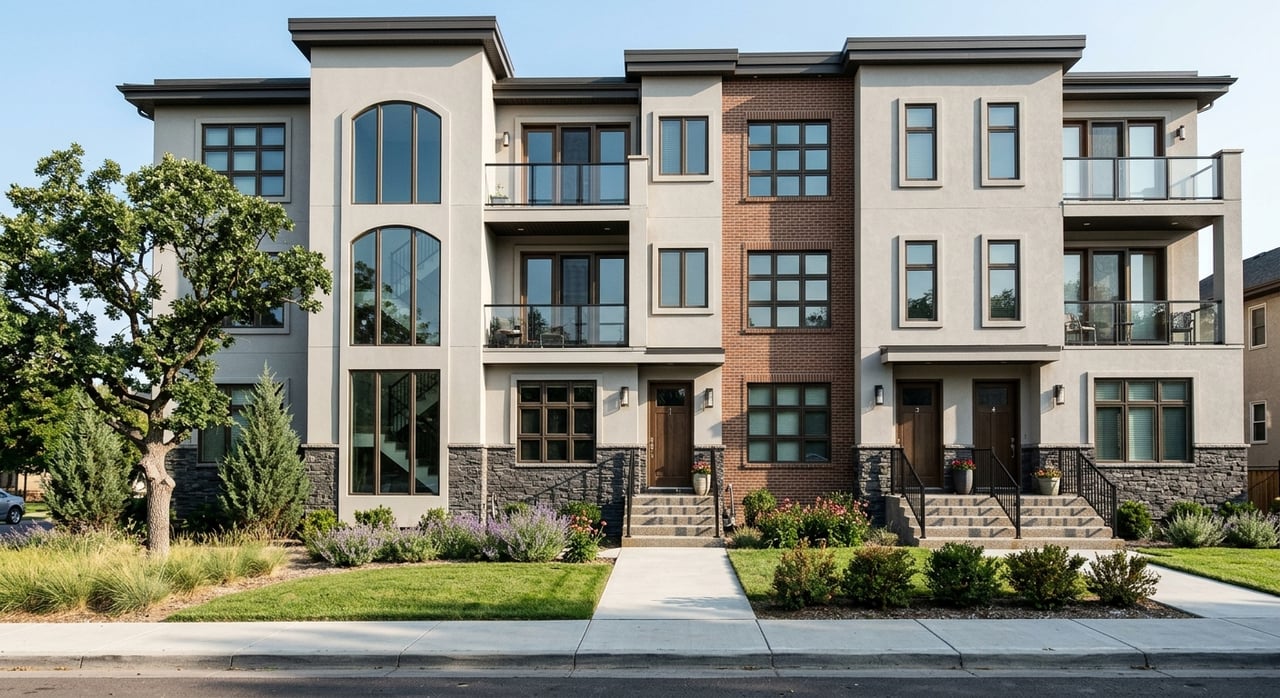
Aurora condo listings range from compact starter units to larger floorplans. Current examples include 1-bedroom, 1-bath units around 544 to 734 square feet priced roughly from $150,000 to $170,000, plus 2-bedroom, 2-bath units near 1,200 square feet around $200,000 to $235,000.
You can also find larger condo options. Current listings include 3-bedroom condos around $215,000 to $230,000, along with 3-bedroom, 3-bath and 4-bedroom, 3-bath units in the mid-$300,000s to mid-$400,000s.
Common condo features in Aurora include:
- Community pools
- Private patios
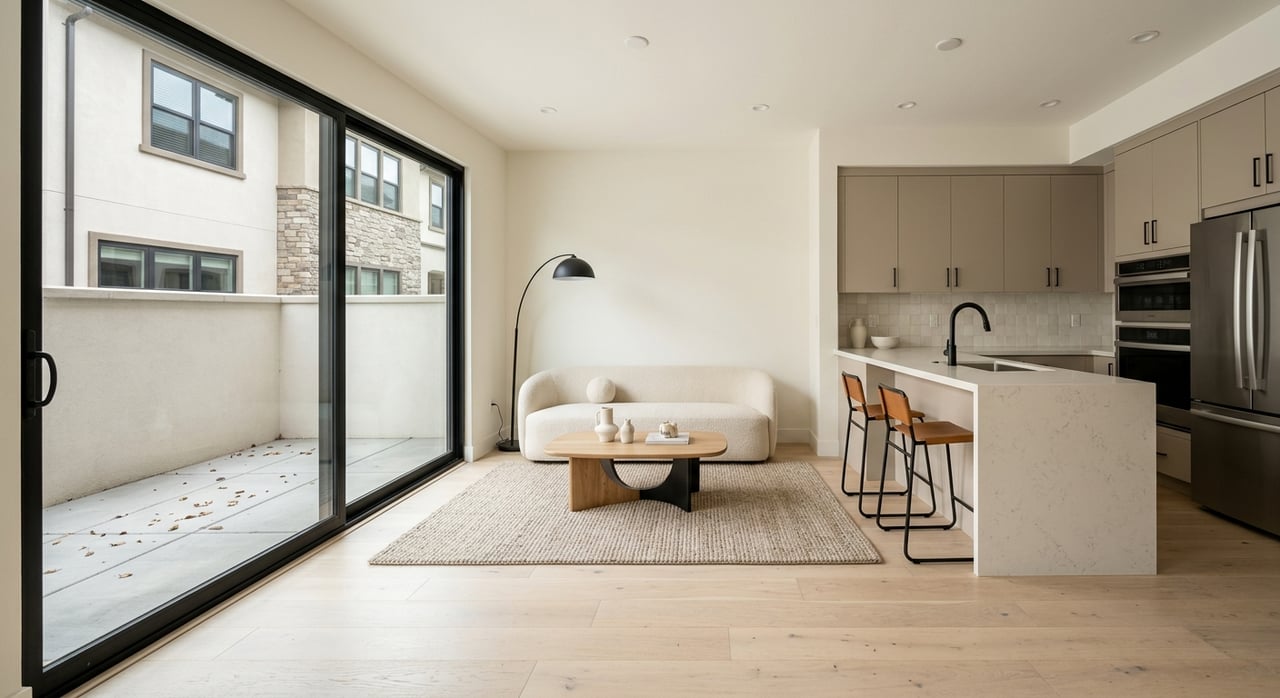
- Open-concept layouts
- Garage parking in some communities
For many first-time buyers, condos can be appealing because they offer a lower purchase price than many townhomes. They can also work well if you want simpler day-to-day upkeep and are comfortable with a more shared community setup.
What townhomes often offer
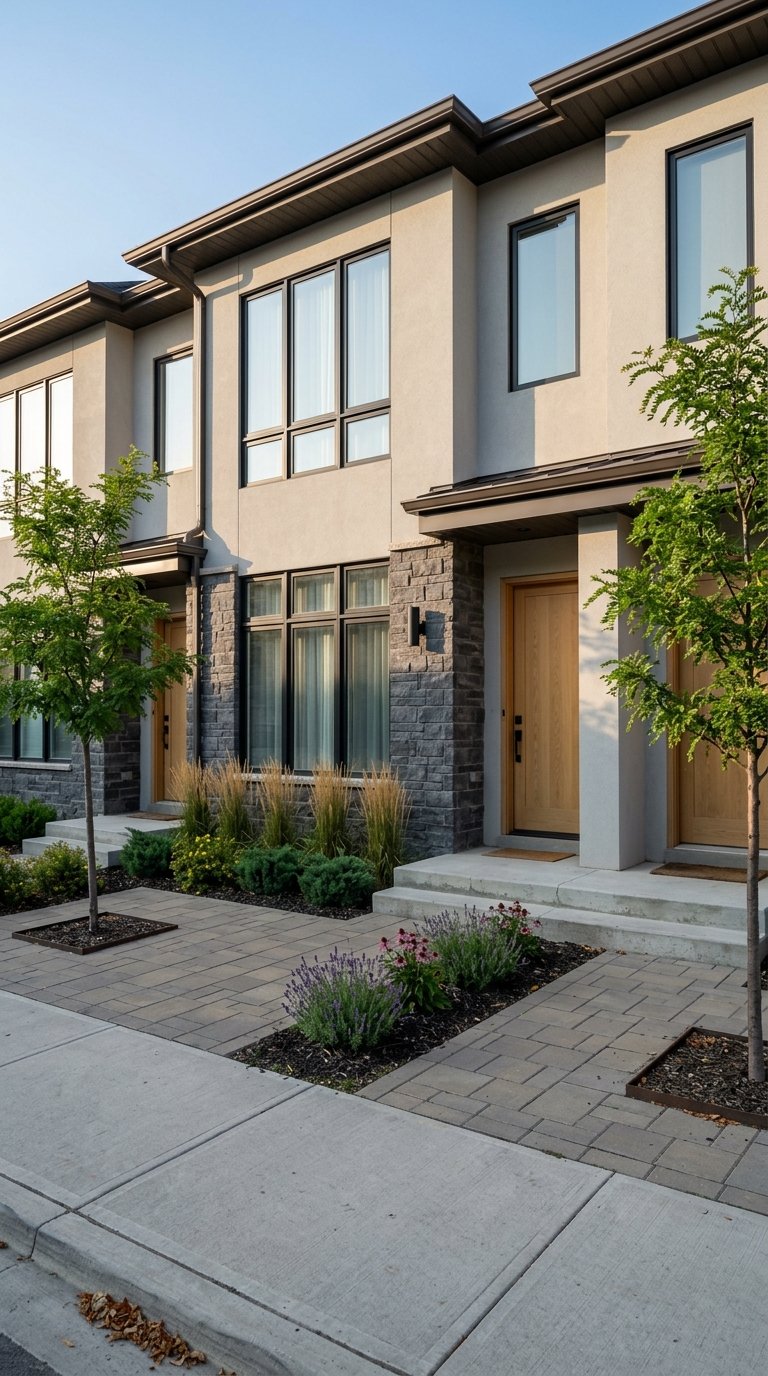
Townhomes in Aurora generally feel more like traditional houses. Current examples include 2-bedroom, 2-bath homes around 1,134 square feet at about $250,000, 4-bedroom, 3-bath homes around 1,392 square feet at about $255,000, and 3-bedroom, 3-bath homes from roughly 1,533 to 1,800 square feet in the $350,000 to $429,000 range.
There are also larger options for buyers who need more room. One current example is a 6-bedroom, 4-bath townhome listed at $749,999.
Common townhome features in Aurora include:
- Attached or detached garages
- Clubhouses
- Open green space
- Gas fireplaces
- Finished basements
- Bonus rooms
- Decks
- Gated access in some communities
If you want more square footage, more separation between living spaces, or features that feel closer to a detached home, a townhome may be the better fit. For many buyers, it is a way to gain space without taking on all the upkeep of a single-family property.
Who each option may fit best
Your best choice depends on your budget, lifestyle, and how you want to live day to day. The right answer is not the same for every buyer.
Condos may fit you if
- You want the lowest entry price possible in Aurora’s attached-home market
- You prefer lower-maintenance living
- You are comfortable with shared amenities and common areas
- You want to keep your monthly payment target lower, while still reviewing HOA dues carefully
Townhomes may fit you if
- You want more interior space
- You prefer a more house-like layout
- You want features like a garage, basement, deck, or bonus room
- You are willing to pay more up front for added square footage and privacy
Downsizers also often look at both options. If your goal is to reduce yard work and exterior responsibilities, either property type could make sense, depending on the community rules, layout, and monthly costs.
Aurora areas to watch for attached homes
Attached-home inventory in Aurora often clusters near transit corridors and redevelopment areas. If commute access or future area improvements matter to you, these locations deserve a closer look.
City Center and Aurora Metro Center
This area sits east of I-225 and around Alameda Parkway in the heart of Aurora’s City Center district. The city identifies it as a key redevelopment area and wants it to evolve into Aurora’s downtown.
For buyers, that can mean a mix of established housing, retail access, municipal services, and long-term growth potential. It is also connected to the broader transit system through the R Line.
Colfax, Fitzsimons, and 13th Avenue
The station area east of Fitzsimons Parkway serves the Anschutz Medical Campus, Children’s Hospital Colorado, and the VA Medical Center. The city encourages medium- and high-density office and residential uses here, including mixed-use development and attached-home layouts nearby.
If you want to be near major employment hubs or medical campuses, this corridor may be worth exploring. It can be especially relevant for buyers who value proximity to work and transit.
Nine Mile, Parker Road, and I-225
Nine Mile is a major transportation node in Aurora. The city has identified a 22-acre redevelopment site here with plans for more than 500 residential units plus retail and commercial space.
That makes this area important for buyers who want access to transit and who are paying attention to future development activity. As inventory changes, attached-home options around this node may continue to draw interest.
Iliff and I-225
The city describes the Iliff station area as a compact, higher-density transit-oriented location with apartment homes and ground-floor retail. Buyers who want a more connected, corridor-based lifestyle may want to include this area in their search.
East Colfax and Original Aurora
Aurora approved a downtown development authority for East Colfax between Yosemite and Oswego. The goal is to support housing, safety, business opportunity, and neighborhood improvements in Aurora’s historic and commercial core.
East Colfax is also relevant because the East Colfax Bus Rapid Transit project is under construction from Union Station to the R Line Colfax station at I-225. If transit access matters to you, this corridor deserves attention.
Havana Street corridor
The city’s 2023 Havana Street corridor study describes it as a six-mile multimodal corridor with regional significance. The focus includes transit, bicycle and pedestrian improvements, safety, placemaking, and economic development.
For buyers, that means this corridor may be appealing if you want strong connectivity and access to everyday services. It is another example of how attached-home searches in Aurora often tie closely to transportation and redevelopment patterns.
HOA documents matter more than many buyers expect
One of the biggest differences between buying an attached home and buying a detached house is the role of the homeowners association. In Colorado, these communities are commonly governed by CCIOA, and the association plays a major role in maintaining common elements, collecting dues, and managing community operations.
Before you close, Colorado’s Division of Real Estate says you should ask for and read the HOA’s governing and financial documents. These materials can help you understand how the association operates and whether it appears financially healthy.
What to review before closing
Colorado’s HOA disclosure materials can include:
- Current budget
- Regular assessments
- Special assessments
- Reserve information
- Financial statements
- Insurance policies
- Bylaws and rules
- Recent board or membership meeting minutes
This review is important because Colorado does not maintain a central public repository of HOA governing documents. In most cases, you will need to request the full package from the seller, your broker, or the association.
It is also important to know that HOA disputes in Colorado are generally civil matters. The state does not provide regulatory oversight or mediation for those disputes, which makes your pre-closing document review even more important.
What HOA fees may cover
HOA fees vary by community, and you should never assume the monthly dues based on the asking price alone. Current listing examples in Aurora show that dues can differ quite a bit, including examples around $222 for a townhome and $380 or $715 for condos.
What those dues cover depends on the specific association documents. In many attached-home communities, fees may relate to common-area maintenance, community amenities, insurance for common elements, or other shared operating costs.
The key point is simple: compare the total monthly cost, not just the mortgage. A lower purchase price can still come with a higher carrying cost if dues are substantial.
Insurance deserves a close look
Insurance is one of the most overlooked parts of buying a condo or townhome. Colorado’s Division of Insurance recommends reviewing both the owner’s HO-6 policy and the HOA master policy to identify possible coverage gaps.
You should also pay attention to deductibles and potential loss assessments. In attached-home communities, those details can affect your out-of-pocket risk after hail or other major damage.
This is especially relevant in Colorado, where associations may need to file claims after severe weather events. A careful insurance review can help you understand what the HOA covers, what you need to cover personally, and where gaps could exist.
Financing can be trickier for condos
Condo financing can be more complex than financing a detached home. HUD notes that FHA condo loans generally require either an FHA-approved condo project or Single-Unit Approval.
For conventional financing, project review may also be required depending on the community. Buyers should ask early whether the project is eligible for the type of financing they plan to use.
This matters because even if you personally qualify for a loan, the community itself may also need to meet lender or program requirements. Starting that conversation early can save time and prevent surprises later in the process.
Smart questions to ask before you buy
If you are serious about an Aurora condo or townhome, here are some of the most useful questions to ask during your due diligence:
- What does the HOA fee cover?
- How much does the association have in reserves?
- Are there any current or planned special assessments?
- Are there pending repairs or major projects?
- What is the owner versus association maintenance split?
- Are there rental restrictions?
- Is the community eligible for FHA or conventional financing?
- What do the rules say about exterior changes or modifications?
These questions can help you compare communities more accurately. They can also help you avoid focusing only on price or square footage while missing important ownership costs and restrictions.
How to shop Aurora attached homes wisely
A smart search starts with your monthly budget, but it should not end there. You also need to weigh HOA dues, insurance needs, maintenance responsibility, financing rules, and location.
For some buyers, the best value will be a condo with a lower purchase price near transit or employment hubs. For others, it will be a townhome that costs more but offers more living space, a garage, or a layout that works better long term.
The most important step is to compare homes in context. In Aurora, attached homes are not one-size-fits-all, and the community details can matter just as much as the floorplan.
If you want help comparing Aurora condos and townhomes, reviewing community tradeoffs, and narrowing your options with a local strategy, reach out to The Real Estate Experts of Denver.
FAQs
What is the difference between a condo and a townhome in Aurora?
- In Aurora, condos are usually the lower-cost attached-home option and often come with a more shared community setup, while townhomes generally offer more square footage and a more house-like feel.
What are Aurora condo prices like right now?
- As of early May 2026, Redfin shows Aurora condos at a median listing price of $250,000, with examples ranging from smaller units around $150,000 to larger units in the mid-$300,000s to mid-$400,000s.
What are Aurora townhome prices like right now?
- As of early May 2026, Redfin shows Aurora townhouses at a median listing price of $385,000, with current examples starting around $250,000 and reaching much higher for larger homes.
What should buyers review in an Aurora HOA document package?
- Buyers should review the budget, regular and special assessments, reserve information, financial statements, insurance policies, bylaws, rules, and recent board or membership meeting minutes.
Why is condo insurance different in Aurora attached-home communities?
- Colorado’s Division of Insurance recommends reviewing both the owner’s HO-6 policy and the HOA master policy because there may be coverage gaps, deductibles, or loss assessment issues that affect your costs.
Are Aurora condos and townhomes common near transit?
- Yes. Aurora’s attached-home inventory often clusters near transit and redevelopment corridors such as City Center, Aurora Metro Center, Colfax and Fitzsimons, Nine Mile, Iliff, East Colfax, and the Havana Street corridor.